Neighborhood Centers: How “Third Places” Turn Residential Developments into Communities
Beyond Conventional Landscaping
Date
23.03.2026
Share
A quiet entrance lobby where residents have furnished the space themselves—with a sofa, a small table, and plants. Children play here during bad weather, while a retired biology teacher voluntarily holds nature lessons for them. This story, from the apartment building where Atlas lead analyst Artyom Kiselev once lived, vividly illustrates a fundamental human need for shared neighborhood spaces. Where dedicated infrastructure is lacking, it emerges spontaneously. Contemporary urbanism, however, offers a more intentional response—community centers that are becoming a new standard of living quality. Today, neighborhood centers in Russia are increasingly introduced by progressive developers, though they remain far from widespread. As Artyom Kiselev notes, “neighborhood center infrastructure is still a privilege available mainly to residents of relatively new developments.” For most urban residents—especially those in economy-class housing or older building stock—the only alternatives are courtyards, cafés, or shopping malls, none of which can fully function as local cultural hubs.
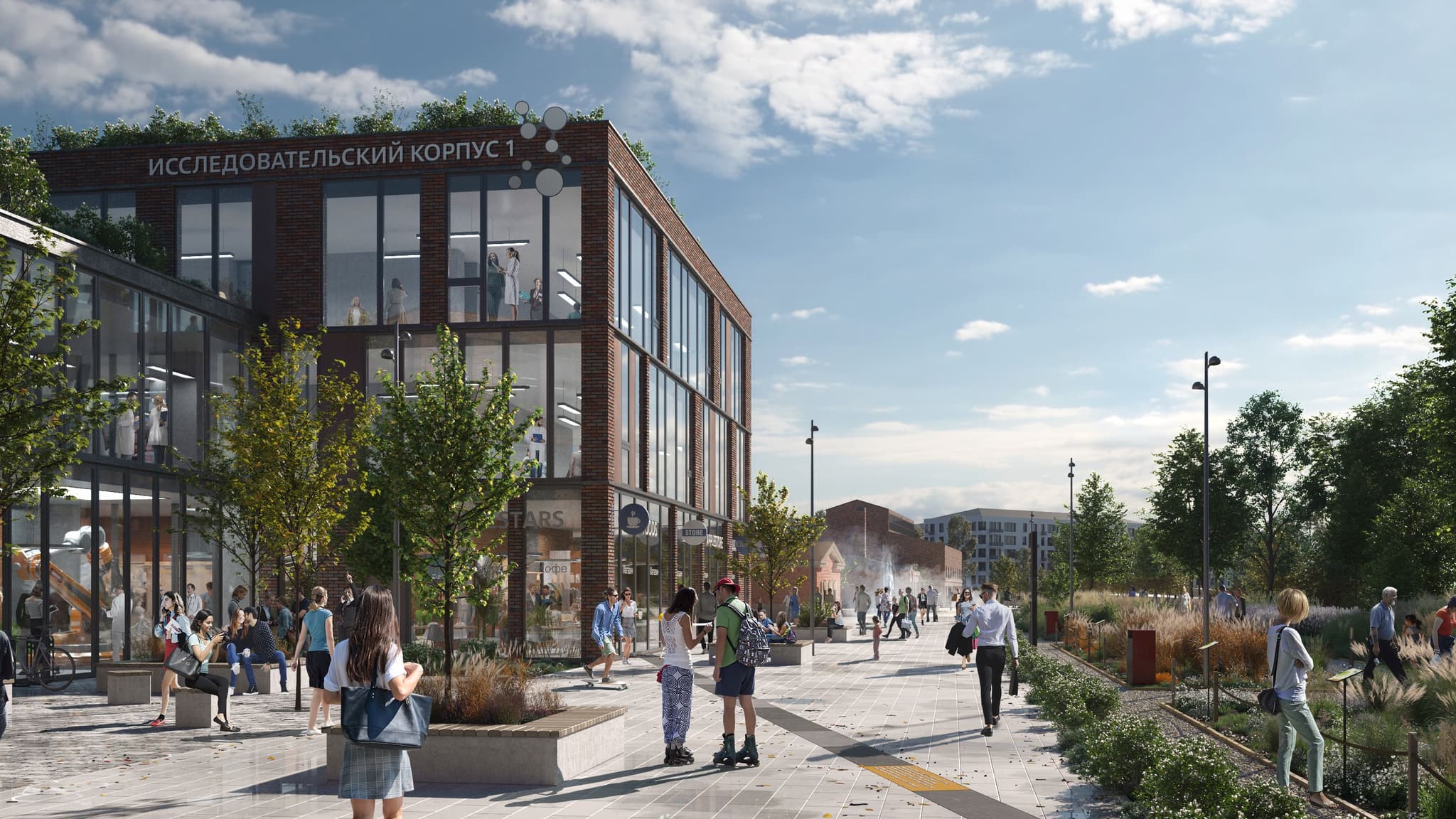
From Marketing Feature to Social Core of the District
A successful neighborhood center is not merely a ground-floor space—it is an ecosystem that integrates commercial services with non-commercial activities. The most resilient models are hybrid formats that combine different uses. For example, commercial coworking spaces and children’s clubs coexist alongside free workshops, lectures, and community events. Several development models have emerged in Russia. The commercial model relies on self-sufficiency through аренда and memberships, as seen in the “Vidny” center by Brusnika. A resident-funded model—where maintenance costs are included in utility fees—has been implemented in the “Eurobereg” development in Novosibirsk. There is also a municipal approach: the “#vMeste” network in Nizhny Novgorod is city-funded and aimed at fostering local self-governance. However, as Kiselev emphasizes, “the presence of a neighborhood center as hard infrastructure does not guarantee success. As always, the soft layer is what matters.” The key role is played by the operator—whether a management company or active residents—who activate the space: attracting partners, organizing events, and building engagement programs. Without this, even the most well-designed space risks remaining unused.
Russian Practices: From Tyumen to Vladivostok
Successful examples demonstrate how the concept adapts to local contexts. In Tyumen’s “Aivazovsky” development, a center integrated with a kindergarten combines commercial and public functions and has received professional awards. In Vladivostok’s “Novy De-Friz,” the space operates within leased premises in a shopping center, supported by a corporate foundation. Meanwhile, Chelyabinsk’s “Newton Club” recreates the atmosphere of a large shared apartment, complete with a cinema room, kitchen, and children’s space, complemented by a loyalty program with local businesses. These cases share common success factors: flexible formats, a focus on everyday needs (coworking, play areas, sports), and an understanding that such centers serve not only residents but can also become attractors for the wider district.
International Context and Future Outlook
Global experience—from the multifunctional Parmer Ponds in Austin to the minimalist Mamkkeot House in South Korea—confirms that “third places” are an essential component of urban environments. They form the framework of local identity, foster trust, and ultimately enhance the market value of real estate. In Russia, the development of neighborhood centers represents a pathway to overcoming social fragmentation in new districts. As Artyom Kiselev concludes, “these spaces foster respect for one’s home and neighborhood, create a sense of belonging to local culture, and help newcomers integrate more easily.” This is no longer just a trend, but a necessity—shifting urbanism from a focus on square meters to a focus on human connections. The future lies in projects where architecture is understood not merely as a physical оболочка, but as a tool for building community.

Ready to collaborate?
We’re here to take on your challenge — just write to us.